Sturdyvant
Ma Rainey's Black BottomSturdyvant is the record-company owner in Ma Rainey’s Black Bottom, a figure whose decisions govern what can be recorded and what musical work will be paid for. Preoccupied with money and described as insensitive to Black performers, he keeps his distance in the control booth while others prepare the studio. His dealings with Ma Rainey and Levee Green reveal two forms of the same imbalance: the company needs performers and new material, yet Sturdyvant retains the power to set the terms and decide what is worth preserving.
Identity and Position
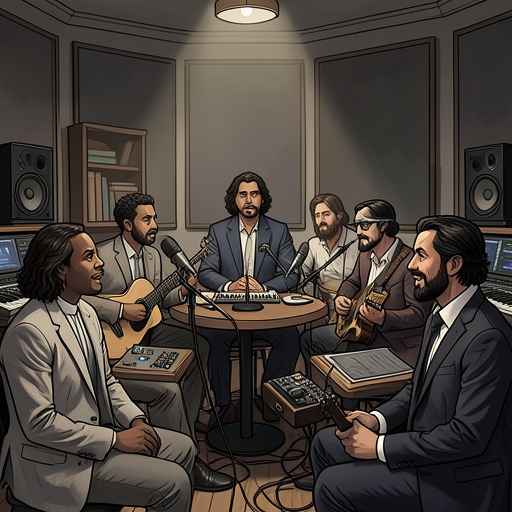
Sturdyvant first appears in the upstairs studio’s control booth, where he puts on earphones as Irvin tests a microphone. The staging gives him a position from which he can listen and issue instructions without standing among the musicians. Irvin addresses him as Mel, while Sturdyvant’s attention quickly turns from the sound check to the practical demands of the recording session. His financial preoccupation is not merely a private trait: it shapes his authority over studio time, equipment, and the possibility of a recording.
He is not indifferent to music as a product. Sturdyvant asks whether Levee will be present and says he wants to hear more of the horn player’s sound. He believes times are changing and that records need to be made different, with something wild and rhythmic. Yet his openness to a changed sound exists alongside his commercial judgment: innovation interests him when it might help the company’s records, but it does not oblige him to record the work Levee later offers.
Business, Risk, and the Recording Session
Sturdyvant describes the previous release as a failure and points to weak sales in New York, where Harlem is located. Irvin counters with the records’ performance in Memphis, Birmingham, and Atlanta, arguing that the company has made a bundle. Sturdyvant insists that money is not the only issue troubling him. He says the business is bad for his nerves, that his wife wants him to slow down and take a vacation, and that he expects to leave in two years for the more respectable business of textiles. His talk joins financial calculation to fatigue and an imagined exit from the record trade; it does not, however, lessen his control over the musicians working for him now.
That control becomes concrete when Sturdyvant enters the band room during rehearsal and asks Levee whether he has finished a song. Later, when Ma Rainey insists that Sylvester Brown be given a microphone, Sturdyvant agrees but limits the opportunity to one chance and raises the cost. Ma refuses to let expense settle the matter. She threatens to leave for her tour, emphasizes that she brings the company more money than its other artists, and insists that Sylvester can repeat the introduction until he gets it right. Sturdyvant’s concession follows her pressure: the session proceeds on terms she has helped force, rather than on his preferred restriction.
Relations with Ma Rainey and Levee Green
Ma’s account of the company’s treatment places Sturdyvant within a wider system of extraction. She says that white businesspeople want her voice but do not care about her, and compares the moment after a recording is secured to being used and then discarded. She also points to the company’s reluctance to spend even a nickel on Coca-Cola despite the money her records have earned. Her remarks describe the larger commercial relationship, while Sturdyvant’s insistence on cost and his authority in the booth give that relationship an immediate, practical face. Ma’s leverage is real—she can threaten to walk out and cite her value to the outfit—but she must use it to secure basic conditions for the session and for Sylvester.
Sturdyvant’s dealings with Levee sharpen the conflict between commercial ownership and artistic ambition. Levee asks about the songs he has already given him and argues that audiences are tired of jug-band music and want something exciting, with fire. He says he has assembled a band capable of playing the material and asks to record it. Sturdyvant rejects the songs as the wrong type and doubts that people will buy them, even though his earlier interest in changing sounds had made room for the possibility of musical experimentation.
Rejection and Aftermath
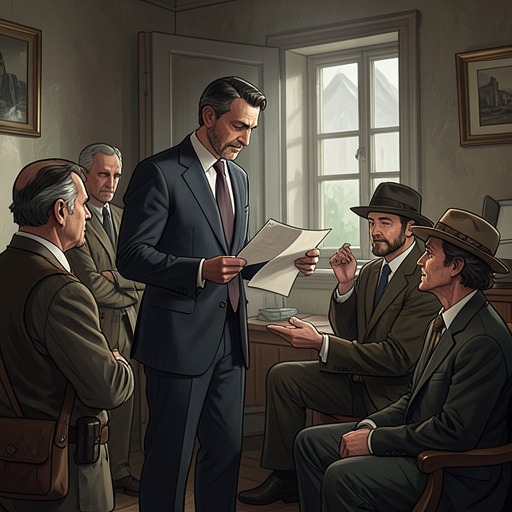
Sturdyvant offers five dollars for each song, presenting the purchase as fair treatment and later as a favor. Levee refuses the money because he wants to record the songs, not surrender them for a small payment. Sturdyvant persists with the offer, then shoves the money into Levee’s coat pocket and leaves quickly. The gesture makes the imbalance physical: Levee’s stated purpose is overridden by the man who controls the commercial decision, and payment is imposed in place of the recording opportunity he sought.
After Sturdyvant is gone, Levee takes the money from his pocket, balls it up, and throws it onto the floor. The other musicians silently gather their belongings; Toledo walks past and steps on Levee’s shoe, prompting Levee to protest. Sturdyvant’s departure therefore does not resolve the dispute or produce a record. It leaves Levee with the rejected songs, unwanted cash, and the humiliation of seeing his request converted into a transaction he had expressly refused. Through that ending, Sturdyvant embodies the company’s power to recognize a musician’s labor only on terms that serve its own judgment and interests.